Blog categories
Catching mackerel by spinning in the grasslands of the Nemunas

It's hot, the sun is scorching, the water is warm, and it looks like it's only suitable for swimming and certainly not for spinning. I used to think the same way, and after the spring pike bite was over, I would swap my spinning rod for a float or a bottom fishing rod. But that was once upon a time, and for the last few years I have been looking forward to summer, and that is when my most fun and productive fishing starts. This is due to the bream and the pike, and even more so in the latter, because in the warm season it is even easier to catch a one-and-a-half-kilogram pike with a spinning rod than a pike of the same size in the autumn.
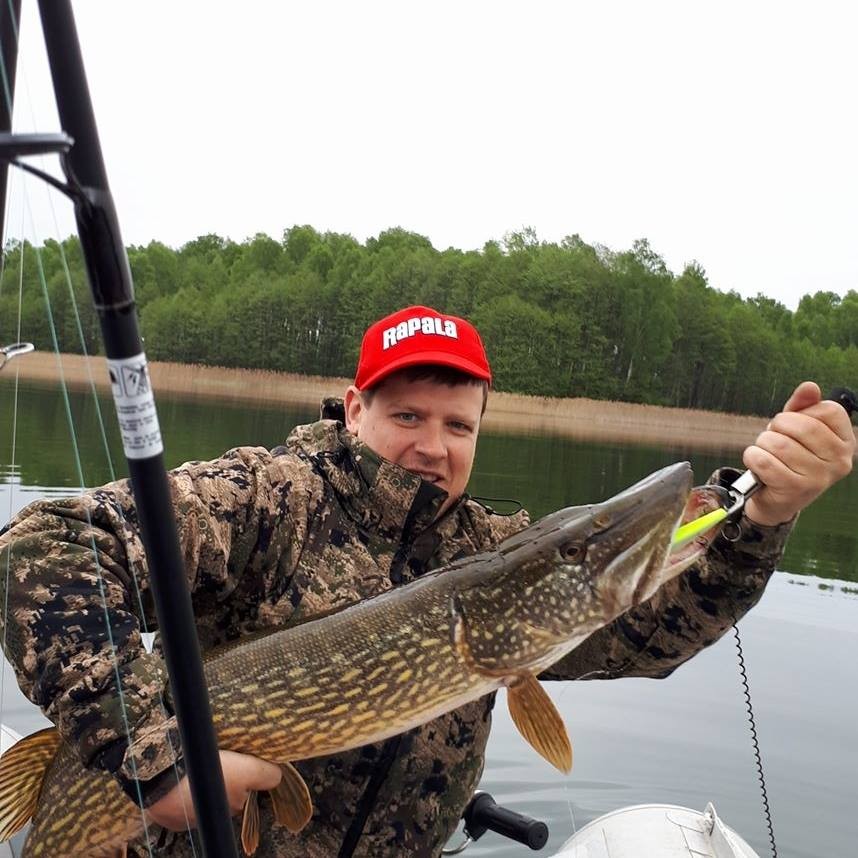
Mackerel is not a fish for which targeted angling in Lithuania is very common and successful, but there is one exception: the mackerel of the Kaunas Nemunas. Here mackerel are caught by spinning from early spring until October. In Kaunas, mackerel are a frequent catch for anglers, and by targeting them, it is possible to catch more than ten beautiful mackerel per day. Mackerel angling is not so much about quantity as quality - small mackerel are very rare, usually 0.8-1.5 kg specimens are caught, and they make the reel brakes rattle and give unforgettable emotions.
I started target fishing for mackerel in the Nemunas near Kaunas three years ago. The first and second years were unsuccessful, but the third year made up for all the effort - the catches came as if from a cornucopia.
I have read in magazines before that it is best to catch mackerel with spinning rods before the grass has grown, but personal experience has shown me that it is the other way round. The most successful fishing starts when the underwater vegetation has emerged. The lush aquatic vegetation is exactly the place to look for minnows. They can be found here all day long, but more on that later.
I would like to start by sharing my opinion on gear. Of course, it is possible to catch a mackerel with any kind of spinning rod, but it is only by choosing the right gear that you will have a truly comfortable and productive fishing experience. As the main baits I recommend are light wobblers and spinners, I would recommend to choose only ultralight or light class spinning rods, i.e. the upper limit of the casting weight of the spinning rod should not be higher than 11g. The length of the spinning rod is a matter of each individual's habit, some people prefer short rods of -2.10-2.30 m, others prefer long - 3 m rods, but there is not a large choice of light class rods in such length. Shorter rods are more comfortable to fish with - they are lighter, easier to take the fish out of the water, but it is difficult to cast the lure far accurately, and it is harder to navigate the lure around the grasses or other obstacles. I would recommend, however, to choose a spinning rod from 2.3 m to 2.7 m. As far as I have tried in practice, light lures up to 4 g with a 3 m even the most basic spinning rod will not cast significantly further than with a 2.4 m spike rod. As far as the action of the spinning action is concerned, in my opinion, it is best to choose a medium fast or a fast leader. i.e. faster action, but with a fairly thin blank. With a faster spinning rod you will be able to cast the bait further and more accurately, and the holding of the fish will depend on whether or not the blank is thin enough and flat enough. Fast action, of course, but lightweight spinning rods with a thin blank cost more. Although nowadays you can find a decent version for 60eur. I would recommend to choose a braided line with a diameter of 0.08 mm - 0.12 mm (according to Japanese I would suggest 0.8 PE). I don't recommend a thinner one, because very often you have to pull the bait out of the grass and a thinner line already causes additional problems. I myself prefer the YGK G-SOULvalmarked 0.8 PE according to the Japanese units of measure. A short Fluorocarbon leader is necessary when fishing with a pintuck, however, the mackerel is a rather cautious fish and a less visible leader increases the number of bites. And why use an already thin pintle in the grass?
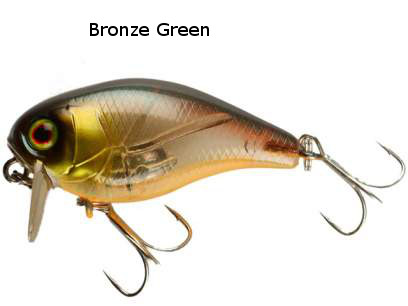
So we still need to choose the right baits before success. In my opinion, the best baits are crankbaits 3-45 mm long. In spring, before the grasses have grown, we should choose slightly spawning lures, while in summer, the best lures are the very shallow wobblers, often marked SSR (Super Shallow Runner). However, there is one important nuance that can spoil your fishing - all-surface lures do a poor job of attracting fish when waves are breaking the surface of the river. It is then harder for the minnows to feel and see it, and a slightly submerged pattern is needed to successfully lure the minnow. The dip of the lure can be as little as 5 cm, which is enough to make it visible to the gurnard again. My favourite wobbler is the Jackall Chubby 38 SSR. It has a magnetic casting system, so it can be cast far enough and it holds the current perfectly. The Megabass Baby Griffon is not a bad lure either, it is much noisier than the Chubby and sometimes it really comes in handy. When the Kaunas Hydroelectric Power Station drops the water level in the Nemunas and all the grasses are on the surface of the water, the Lucky Craft Gengoal wobbler is indispensable. Its two-pointed upward pointing hooks help to avoid the grasses, but do not prevent the mackerel from successfully biting on the hook. Of the cheaper models, the Pontoon 21 Hypnose really works, but the all-surface SSR model has a poorer current holding. Meanwhile, the deeper diving Hypnose SR works flawlessly. Larger mackerel can be tempted with larger cranks. My favourites are the Jackal Chery 44 and Pontoon21 Redrag. As far as colours are concerned, the Nemunas mackerel are not particularly picky about any one colour. They are hooked on a variety of different colours. Slightly transparent wobblers such as Jackall Bronze Green, Ghost Ayu, Clear Shrimp colours work very well both day and night. Also one of the most successful colours is Gold & Black with a pink belly and black back. Black, brown or other dark shades imitating bugs are also irresistible to mackerel. It is also possible to catch mackerel well with number 1 or 2 suckers. The most successful patterns are those in completely dark or copper colours.
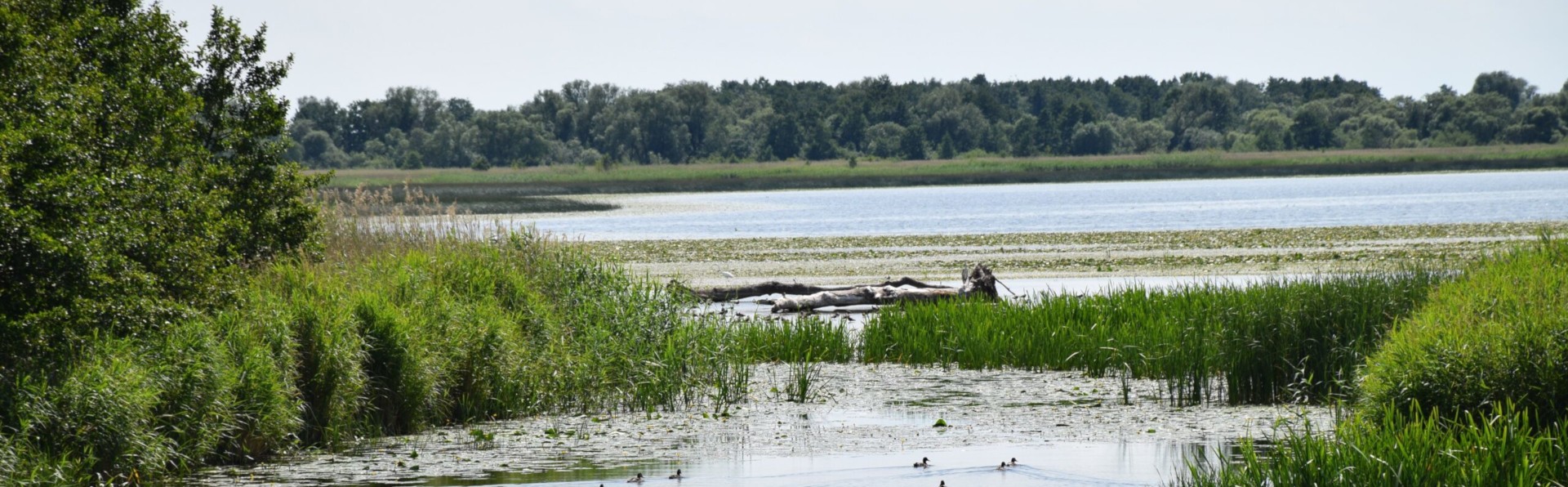
So we've covered the gear and baits, now it's time to find the mackerel and bait them properly. As I mentioned at the beginning of this article, most of the minnows are found in the water grasses or right next to them in the quieter parts of the river. In the main current we will see fewer bites, but stronger current areas close to the grassy calms can bring record specimens. There are a lot of "mekna" spots in the Nemunas near Kaunas, and they are very easy to spot when the water is low and all the grasses come to the surface. If possible, I would suggest trying to catch them from a boat. Then I would recommend looking for grassland away from the shore. This is where experience has shown that most of the mackerel are found. If this is not an option, no problem, put on your waders and a life jacket (a must, as the HE raises the water very quickly) and go.
Mackerel can be caught all day long. They can be successfully caught at any time of the day. Early in the morning, late in the evening or at night, then it is not difficult to catch them in the grasses close to the shore. At midday, it is best to check the grasslands closer to the main current, either by boat or by deep wading. As I have already mentioned, when there is no wind, surface wobblers are indispensable. If the water is high, they can be cast over the tops of the grasses, if the water is low, it is advisable to check the clean bottom areas near the grasses. In large grasslands with medium to low water, the current is not strong, so it does not make a big difference whether you cast upstream, across the current or along the current. The most important thing is to be able to guide the bait as close as possible to the grasses, i.e. potential hiding or resting places for the minnows. When the hydroelectric power station opens the sluice gates and the water level rises and the current becomes stronger, the mackerel will usually hide behind a larger clump of grasses that blocks the current. You should then stand slightly downstream of the spot so that you are behind the gulls and aim the wobbler as close to the grass mound as possible. In calm weather, fishing is most effective as the mackerel will give away their location, usually by pinning their backs, or by exposing themselves to attack their prey. Then immediately throw the bait directly on their heads, which they are not afraid of, and are happy to grab a tasty morsel that has fallen out of nowhere. Often a mackerel's attack is not successful and it does not hang on to the tees, so throw the bait as quickly as possible to the same spot and a second or third cast will be more successful. If after a few casts the mackerel is still not interested in the bait, you can try replacing it with another bait.
As I have already mentioned, the most important success factor is to be able to cast the lure as close to the grass as possible without biting it. If you hook the hook into the grass, unfortunately you will not be able to pull it out quietly and you will spook the fish. Again, it is worth mentioning that, especially when fishing with surface lures, there are a lot of empty attacks. If you notice this, try changing the hooks to slightly larger but thinner ones. The reason for the thinner hook is that too much weight will unbalance the wobbler and it may start to dive instead of floating on the surface and giving off those magic waves that not only the mackerel can't resist. Very often, when fishing on the Nemunas in summer, small wobblers are tempted by salmon. As a rule, this happens early in the morning or in the afternoon, and after dark you can expect a sturgeon attack. Once, fishing with surface lures, I was lucky enough to catch 6 mackerel over a kilo, 4 salmon, two of which were legal size, and two sturgeon over a kilo in one day. Of course, a sworn angler doesn't cut the branch on which he sits, and I still recommend releasing the fish back. Even a river like the Nemunas is not an inexhaustible resource, and the mekhne's culinary qualities are far inferior to its combativeness in the water.
And finally, where you can get live advice and buy fishing tackle that is suitable for mackerel fishing. Of course, this can be done at Pramonės pr 41a. In Kaunas, where there is a fishing tackle shop - Ažūklė.